Context
A male-dominated category with a proven primary purchaser
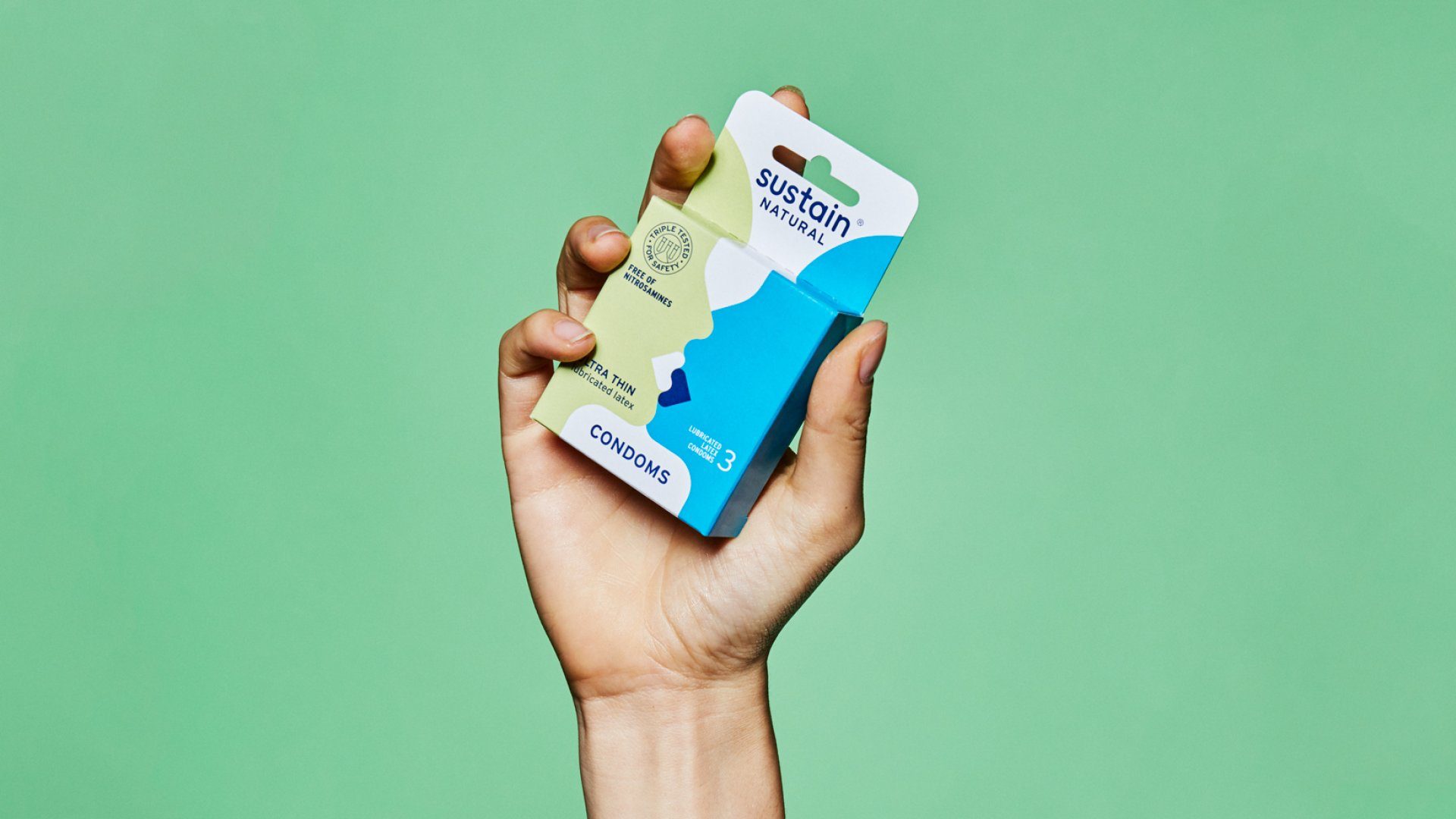
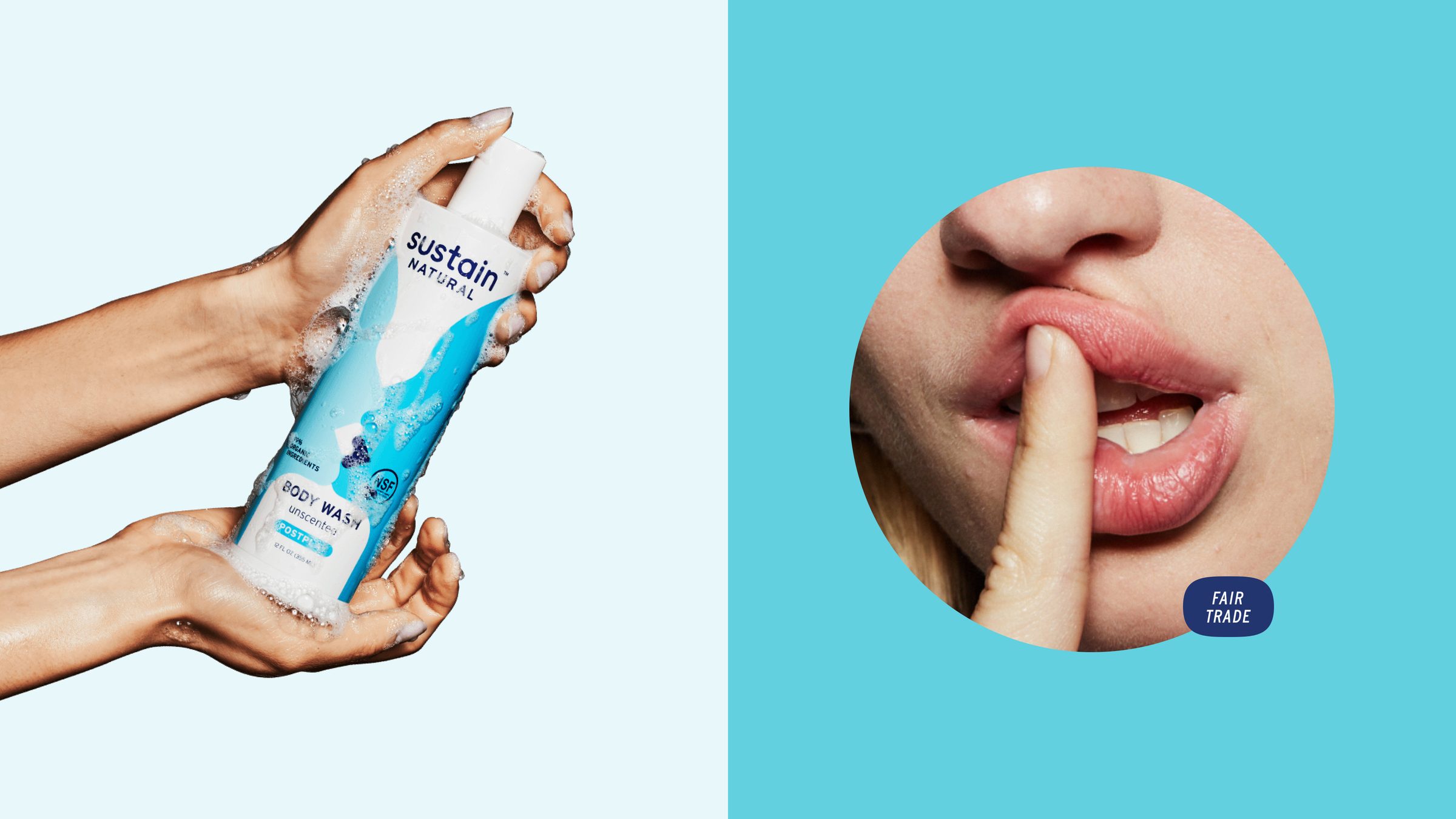
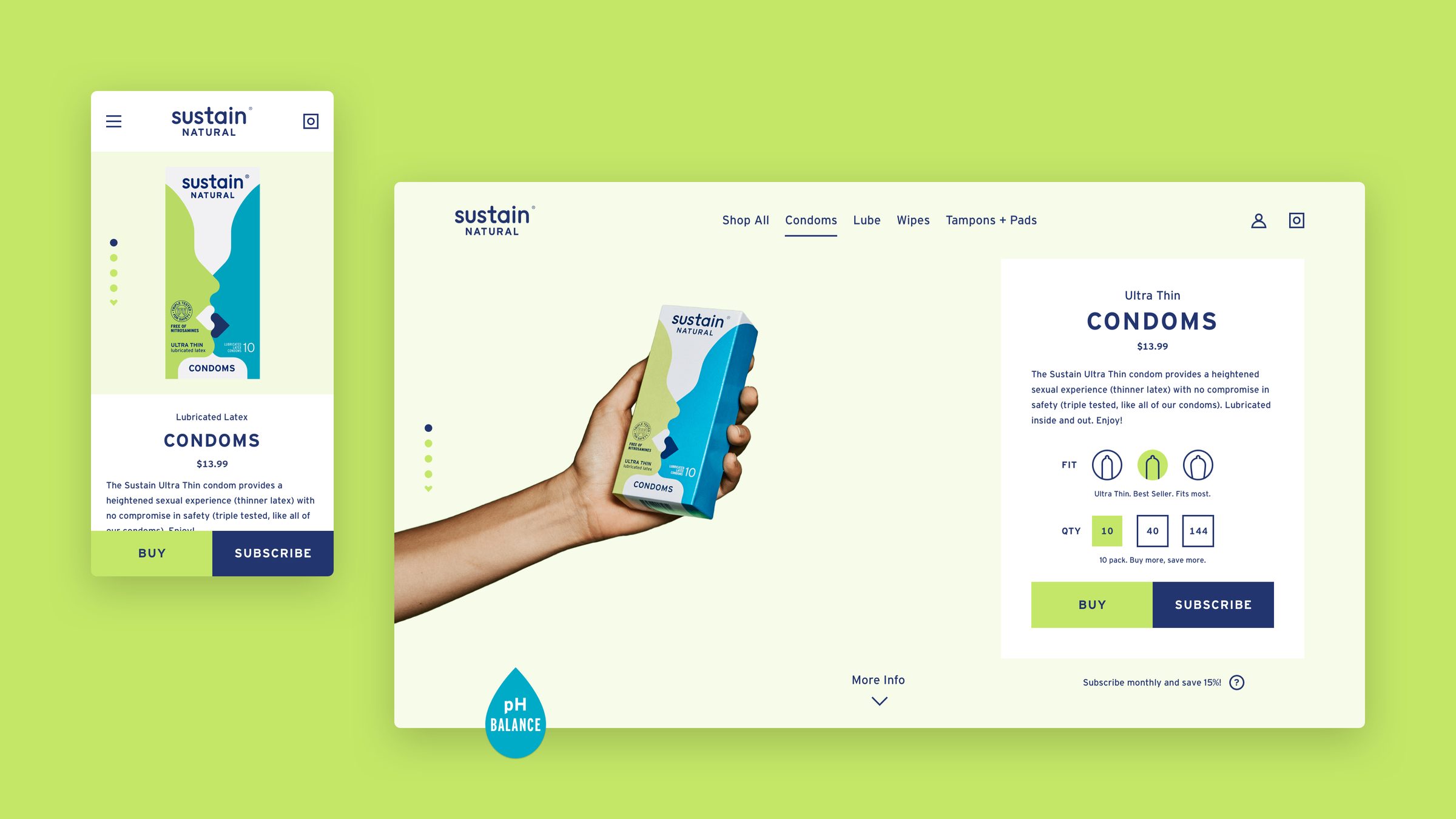
Sustain made natural condoms, lube, and wipes, then organic tampons, pads, and liners. The sexual wellness aisle was built for men — clinical packaging, bro humor, or both — while women were already doing much of the buying.
Sustain sold to that buyer directly, in a category the FDA doesn't require to disclose ingredients.
Complication
Bold without being crude, inclusive without being soft
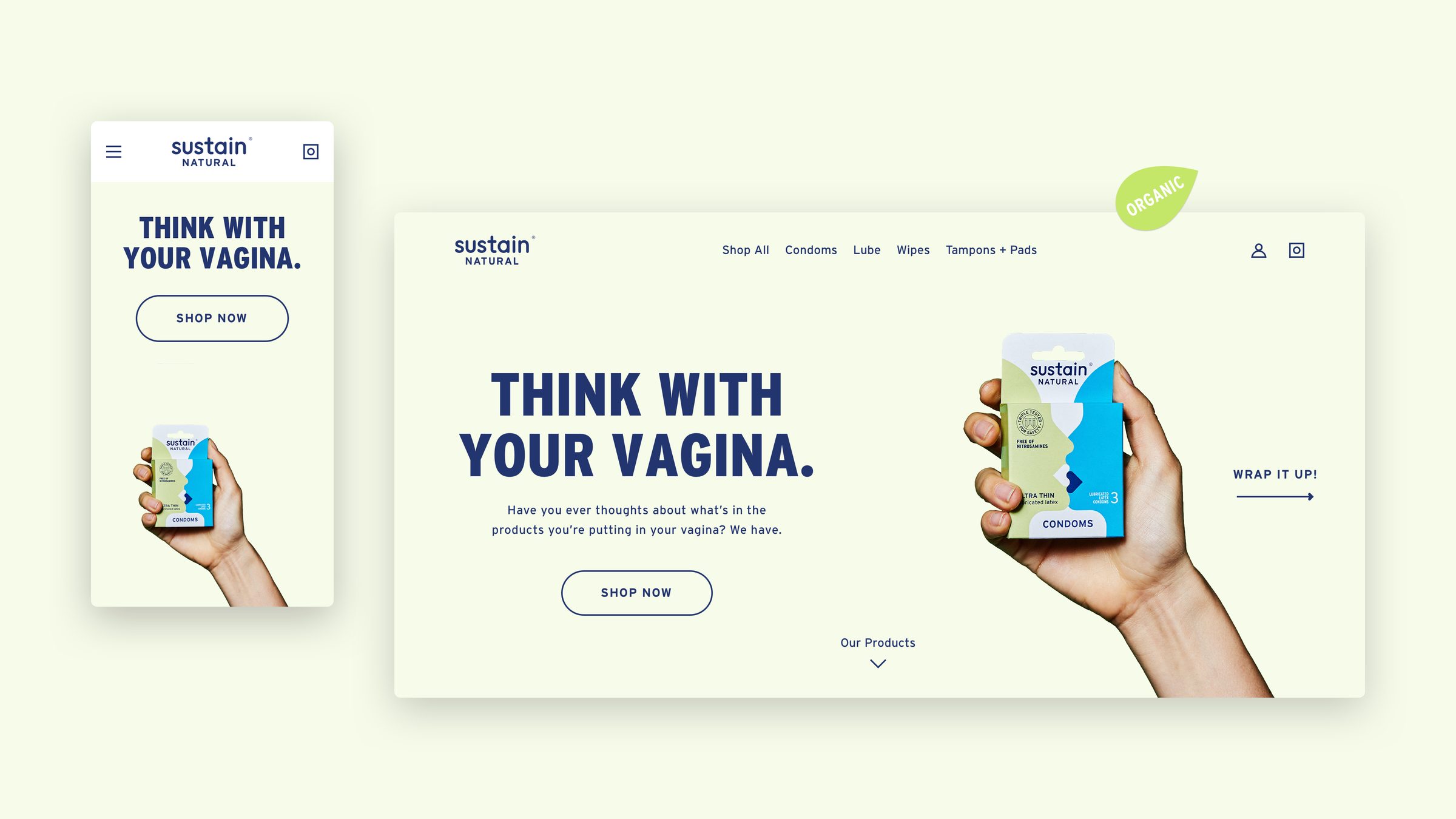
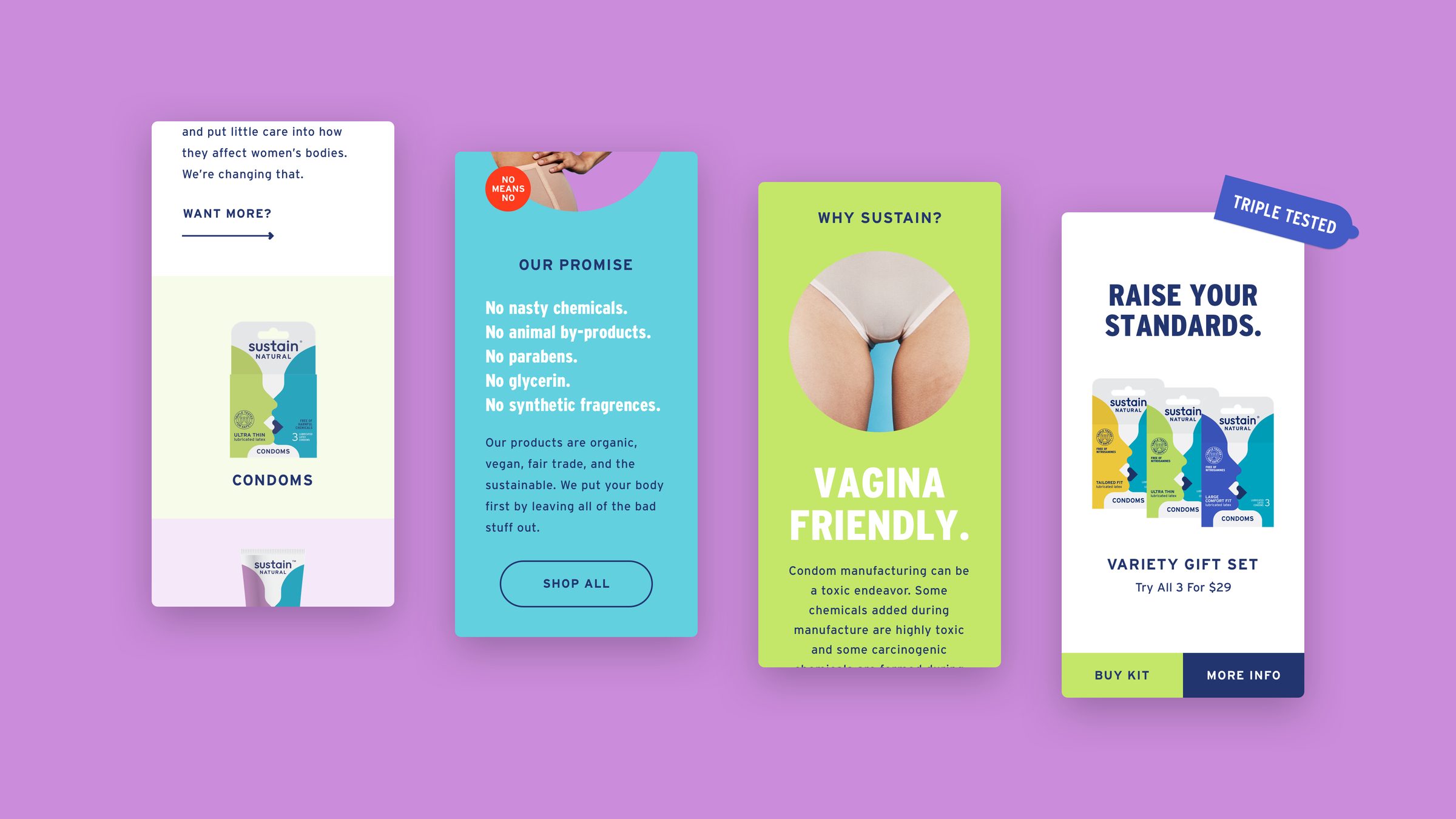
The brand had to say vagina on a shelf and on a homepage, talk about consent and chemicals in the same breath, and stay credible to a buyer who'd been either ignored or talked down to.
Gender sensitivity ran through every decision. Two failures to avoid: the wink that alienates, and the euphemism that hides.
Market Thesis
Women take charge of their sexual health — from home, or from a phone
The bet was that the primary purchaser wanted a brand on her side, products she could check, and a way to buy without standing in the aisle. Direct-to-consumer was the access strategy, not just the channel.
The Turn
The client came back for femcare
[Timeline needed: when the first engagement ended, and when Sustain returned.]
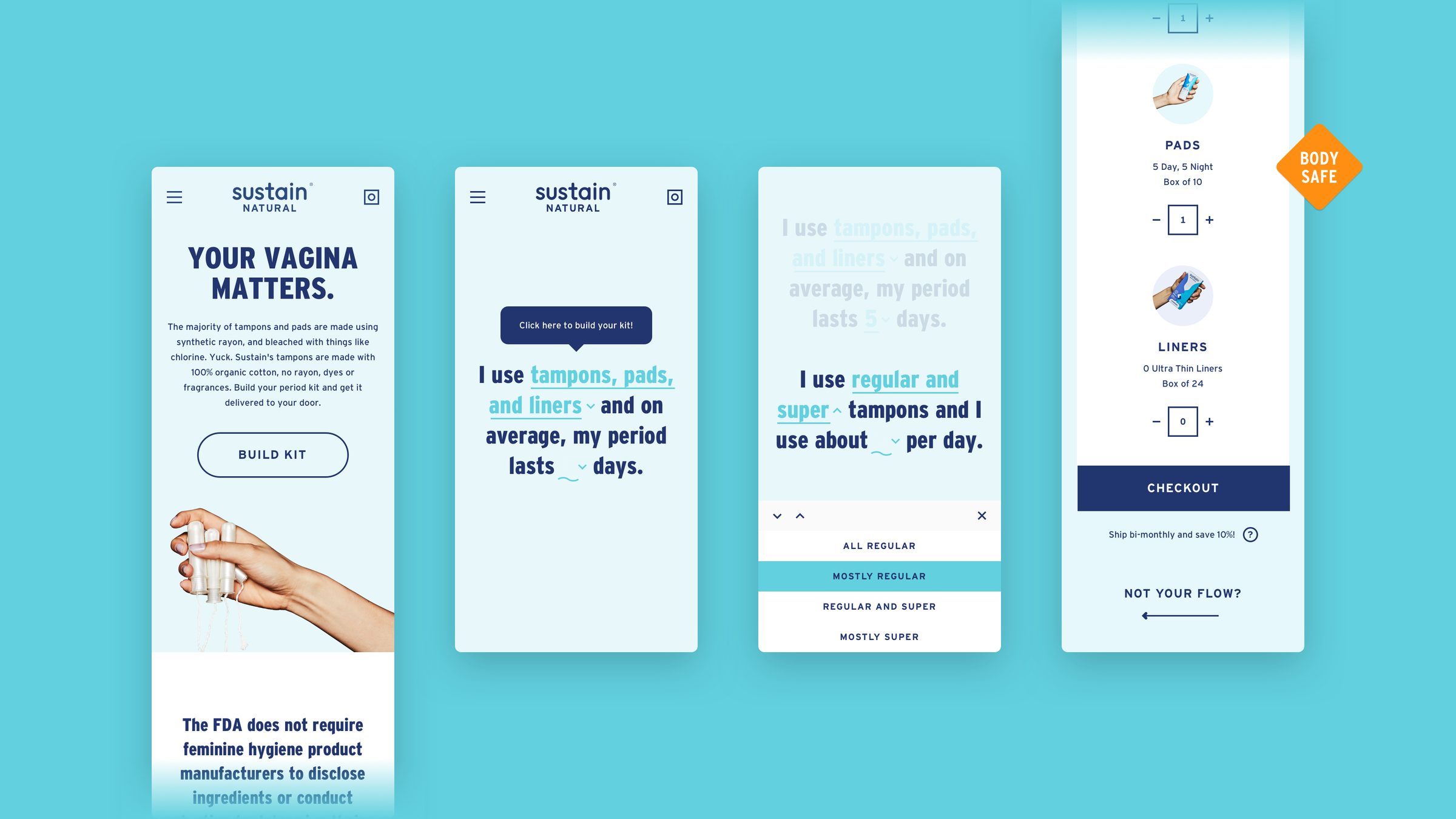
After the sexual wellness launch, Sustain came back to extend into organic tampons, pads, and liners. That shifted the business from one-off purchases to a recurring need — and the product, the brand, and the business model had to move together.
The answer was the first build-your-own period kit subscription: a product decision, a pricing model, and a brand promise in one flow.